
When it comes to grain drying, farmers and agronomists regularly debate the merits of on-floor drying versus continuous flow (or continuous-mix-flow) dryers. Both systems have their place, but for many UK farm businesses — particularly those dealing with unpredictable harvests — on-floor drying offers a compelling combination of flexibility, resilience, and cost-effectiveness that continuous flow systems struggle to match.
No Pinch Points — Keep Tipping, No Matter What
One of the most significant advantages of an on-floor drying system is that it eliminates the capacity bottleneck that continuous flow dryers create. Some continuous flow setups mitigate this with a large intake pit, which can buffer enough capacity to keep harvest moving — but ultimately, the dryer is still the critical path. If something goes wrong with it, harvest stops. The machine has to be repaired before a single trailer can be turned around, and in a wet harvest that kind of downtime can be extremely costly.
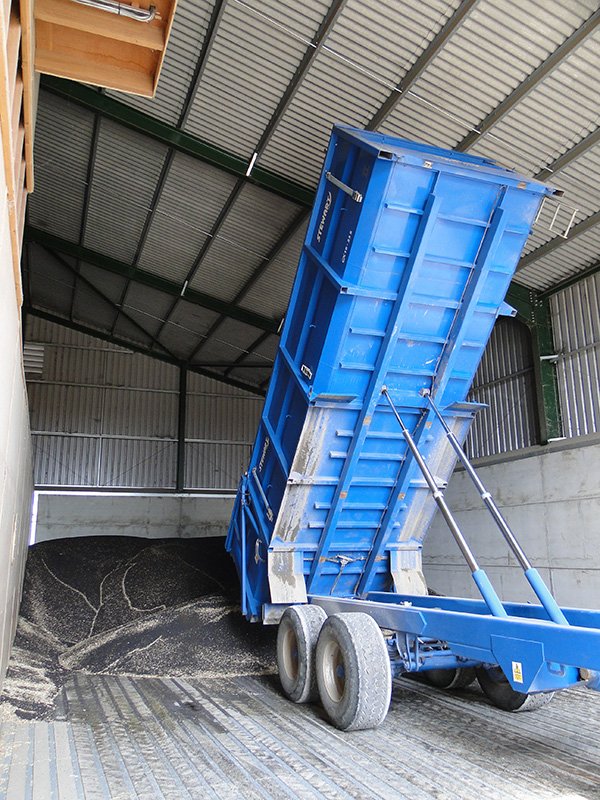
With an on-floor store, trailers can simply keep tipping. There’s no single point of failure that brings the entire operation to a halt. Even if a fan or burner develops a fault, the grain is already safely in the store and can wait — you don’t have wet grain piling up in a system that’s ground to a halt. You pick up the phone, keep the air moving, and carry on. For farms working flat out to beat the weather, this resilience is invaluable.
Drying Costs: On-Floor vs Continuous Flow
Running costs are where on-floor drying really demonstrates its financial advantage. According to figures referenced in a Farmers Weekly article (published in 2020 — please note that energy prices have changed significantly since then, and current costs may differ considerably), temperature drying on a floor came in at around £1/t for every percentage point of moisture removed. RH drying on a floor cost approximately £1.20/t per point, while continuous flow dryers ranged from £1.20 to £1.50/t per point depending on the system.
Even with that caveat around pricing, the relative difference between the two methods tells a clear story. On-floor drying — particularly temperature drying for wetter grain — consistently comes out cheaper to run per tonne, and when you’re handling hundreds or thousands of tonnes each harvest, those savings add up to a meaningful figure on the bottom line.
The Hidden Cost of Overdrying
Whether you’re running a continuous flow dryer or an on-floor system, overdrying is one of the biggest and most avoidable costs in grain drying. The numbers are stark: reducing wheat to the correct moisture is the target, but overdrying to 13%, when you’d contracted to 14%, increases drying costs by around 30% through additional energy use and weight loss. Overdry to 12% and costs rise by 50%. Capacity also drops — overdried grain moves through a continuous flow dryer slower than it needs to, meaning you’re getting less throughput for your money.
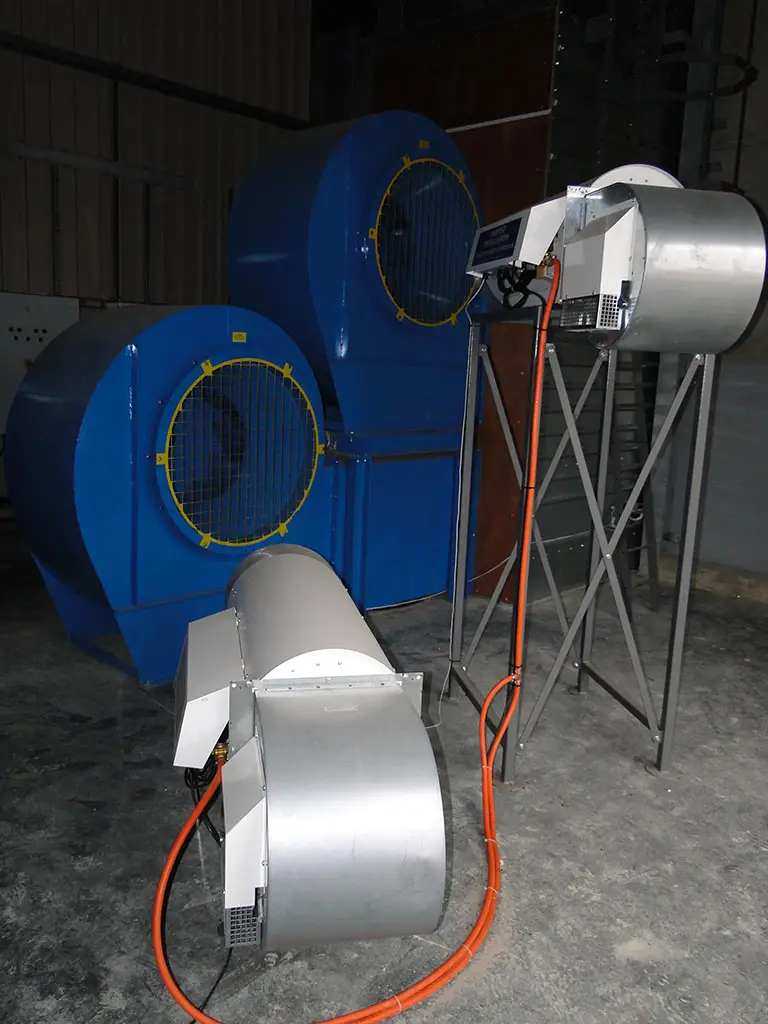
The solution — for both system types — is good automation and control. Modern humidity controllers and intelligent dryer controls take the guesswork out of the process, monitoring conditions in real time and adjusting burner output to hit the target moisture consistently. For on-floor stores, a Constant Humidity Controller (CHC) monitors outside relative humidity and only fires the burners when the ambient air needs drying — when conditions are naturally dry enough, the system runs on ambient air alone, cutting fuel use significantly.
Can On-Floor Drying Handle Wet Grain?
A common misconception is that on-floor drying is only suitable for areas of the UK with drier climates, or for grain that comes off the combine at relatively low moistures. In practice, a well-designed on-floor system can handle grain at up to and above 24% moisture content, given the right setup and approach.
For grain at 18-19% or below, Relative Humidity (RH) drying is the standard approach — the system monitors outside conditions and adjusts the burner to ensure the air blown through the grain is dry enough to extract moisture efficiently. For wetter grain at 20% and above, a temperature drying process is used: burners are set to 45°C, raising the crop temperature during the day to 27°C and then allowing it to sweat overnight before dry air is passed through the following morning. Temperature drying on a floor removes approximately 1.5% moisture per 24 hours — a highly cost-effective process for handling large volumes of wetter grain.
So, Which System Is Right for Your Farm?
The right drying setup will depend on your farm’s specific circumstances — scale, geography, the crops you grow, and the moisture contents you’re typically dealing with at harvest. But for the vast majority of arable farm businesses, on-floor drying is the system that works hardest for the farm.
On-floor drying offers a compelling package. Lower running costs, greater operational flexibility, no harvest bottleneck, resilience to equipment faults, and the ability to handle a wide range of grain moisture contents make it a system that works hard for the farm rather than the farm working around it. When you add in the improvements that modern automation brings — remote monitoring, smart humidity control, and alerting — the management burden is lower than many people expect.
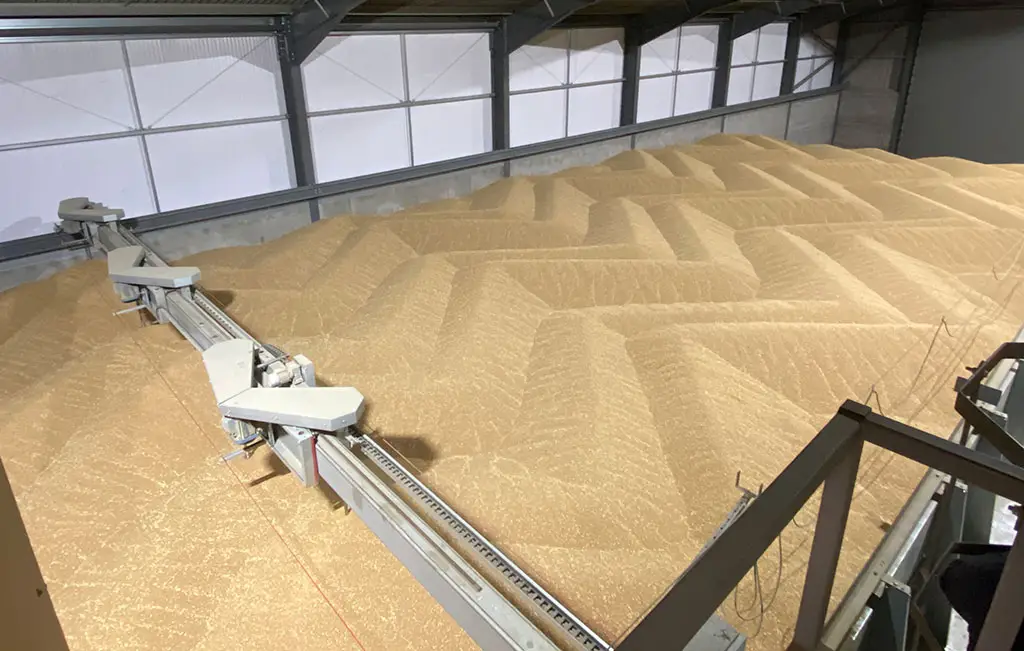
If you’d like to discuss the right drying setup for your farm, our team at Harvest Installations would be happy to help. We design, supply and install on-floor drying systems and can advise on the full range of options including grain stirrers, burners, automated humidity controllers and fan systems — all tailored to your store and your harvest.